Fleurop & Roses with Fairtrade Max Havelaar label

Fleurop & Roses with Fairtrade Max Havelaar label

Fleurop has been a partner of Max Havelaar since 2003 and is committed to Fairtrade roses which not only care for the environment but also for people.
Max Havelaar
Fleurop is committed to ecological and social sustainability in rose cultivation
Sustainability can be ecological, but also social. The aim here is not only to keep an eye on the environment, but also to look after the welfare of hard-working people - including those who harvest flowers in developing countries. Fleurop has been a partner of Max Havelaar since October 2003 and offers roses with the Fairtrade Max Havelaar label via www.fleurop.ch.
Fairtrade roses can be recognized by their Fairtrade label
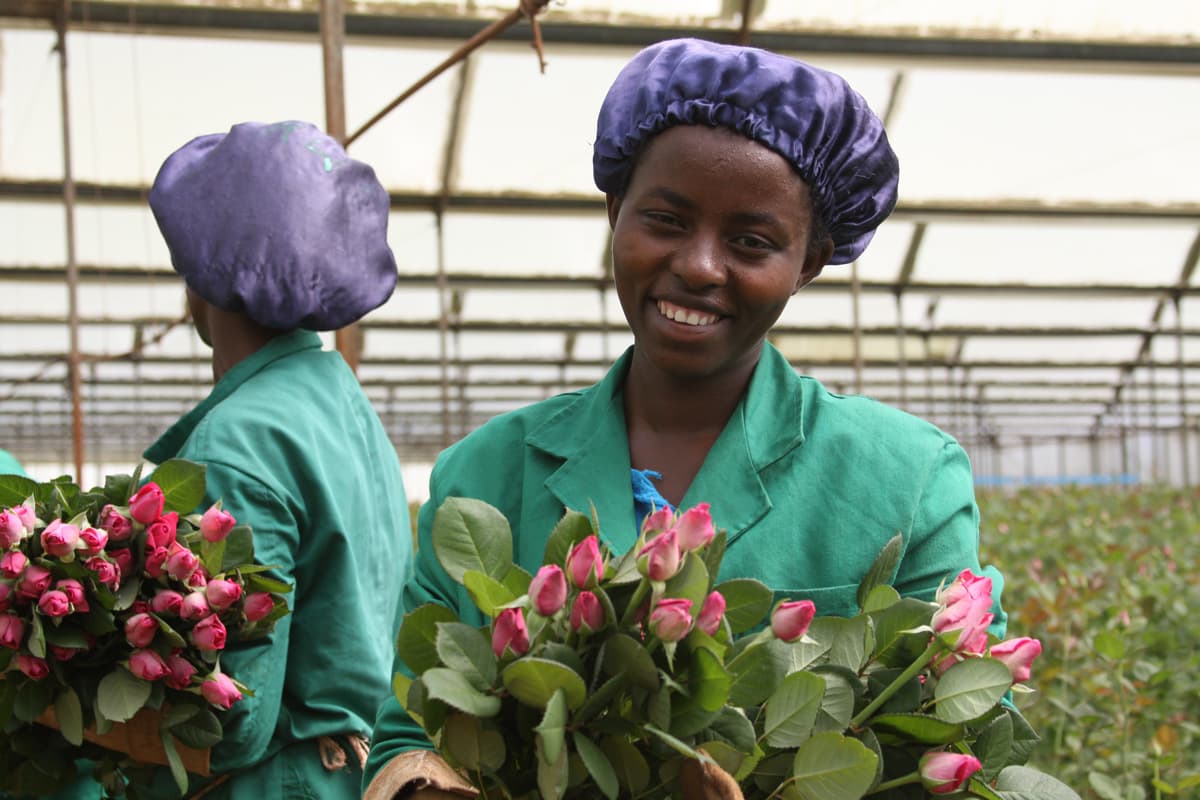
Fairtrade Max Havelaar is a non-profit organization that was founded in Switzerland in 1992 to promote fair trade with products from developing countries. The primary focus is to ensure a decent working environment for plantation employees and to improve living conditions for families and whole villages. So that people can recognize such products, the Fairtrade Max Havelaar Foundation labels fair trade products with its Fairtrade label. That also applies to roses.
Community projects
Roses with a premium for community projects
Roses with the Fairtrade label include a premium for community projects. The premium goes directly from every purchase to a separate premium account for the flower farms, where the workers decide what they will do with this money. This can be, for example, subsidized visits to the doctor or the construction of drinking water wells or schools. Microcredits of up to 500 US dollars are also granted, which are mainly used to build houses, set up new businesses and promote women's business activities.
Fairtrade plantations
Protection of the environment too
Fairtrade Max Havelaar certified plantations follow strict regulations to protect the environment and groundwater, as well as the use of fertilizers and sprays. External environmental experts confirm that Fairtrade-certified plantations are environmental leaders and have been proved to use less spray. Last but not least, water consumption has been reduced by almost half over the last 10 years by switching to drip irrigation and landless farming. The surplus irrigation water is often purified in a closed cycle and used several times over. The sewage, on the other hand, is purified in natural treatment systems.

Learn more about Fleurop & Sustainability

Fleurop-Interflora (Schweiz) AG - sustainability as the top priority Sustainability is an important issue for Fleurop Switzerland. The review of all departments has already led to many changes, but there is still a lot to be done. Fleurop & Flowers with CO2 information Since May 2025, Fleurop Switzerland has been rating bouquets and flower arrangements on a four-point CO2 scale. The aim is to provide greater transparency for sustainable decisions. Fleurop & Swiss Flowers Since 2022, Fleurop has also been offering bouquets and arrangements made exclusively with Swiss flowers. Find out the background here. Fleurop & Roses with Fairtrade Max Havelaar label Fleurop has been a partner of Max Havelaar since 2003 and is committed to Fairtrade roses which not only care for the environment but also for people. Fleurop & Honey from Bee-Family Fleurop has been a partner of Bee-Family since 2016 and supports the keeping and preservation of healthy bee breeds in unspoiled, natural regions. Fleurop & Wines and Prosecco from Albino Armani Sustainability is not only an issue for Fleurop Switzerland, but also for other National Units. They are in active contact with each other and are trying to achieve common goals. FleuropHOME - with sustainable and socially committed suppliers The FleuropHOME lifestyle store works almost exclusively with Swiss suppliers. Some of the many items are produced sustainably, ecologically, energy-efficiently, fairly or socially. Fleurop's National Units abroad - focus on sustainability Sustainability is not only an issue for Fleurop Switzerland, but also for other National Units. They are in active contact with each other and are trying to achieve common goals.