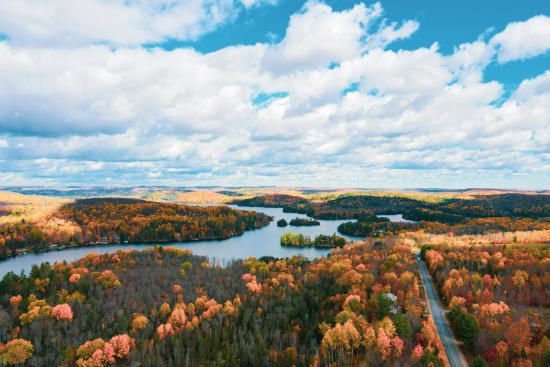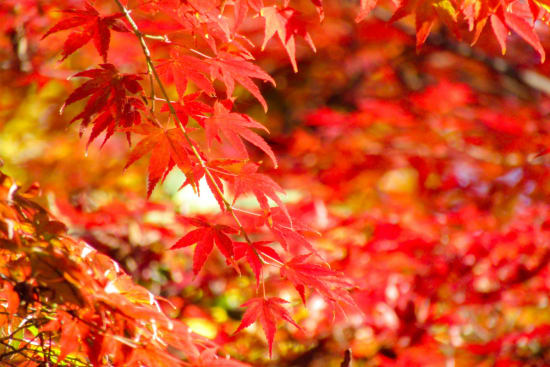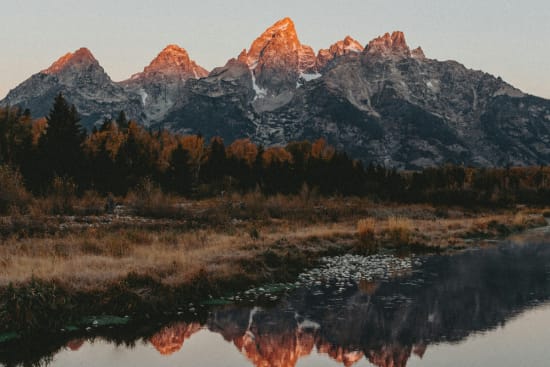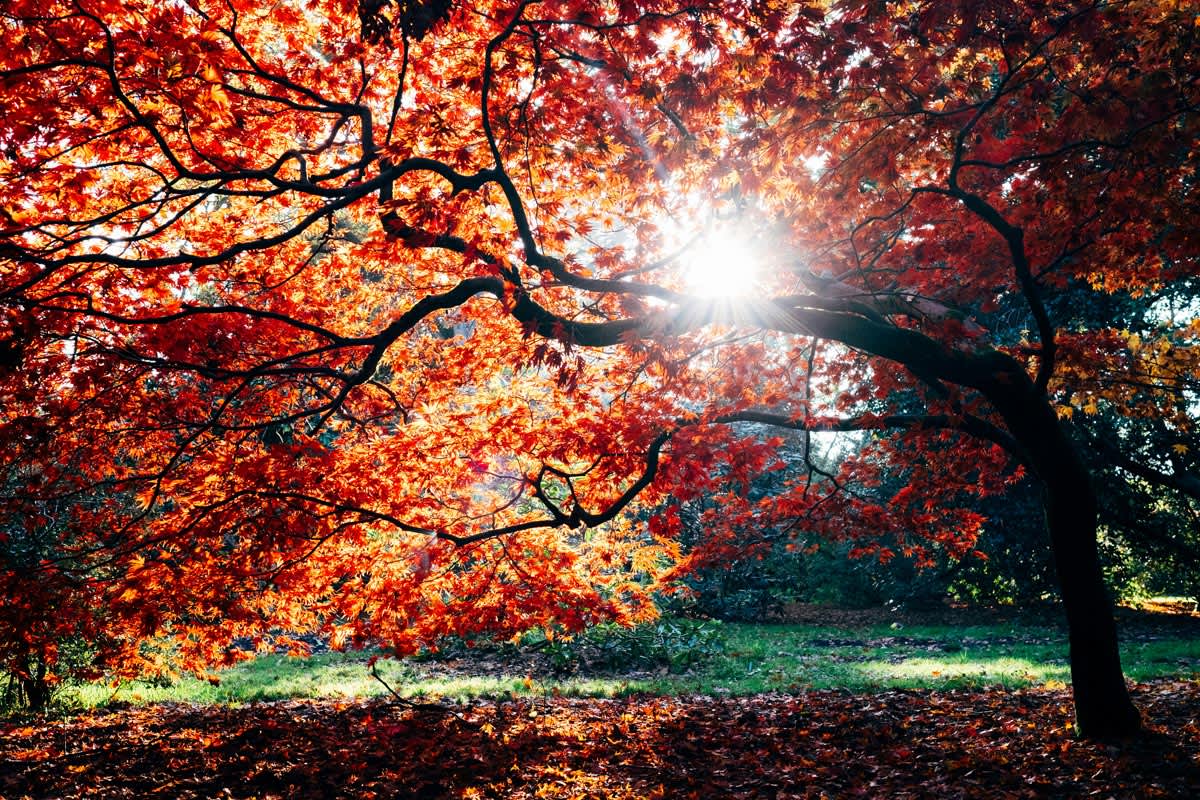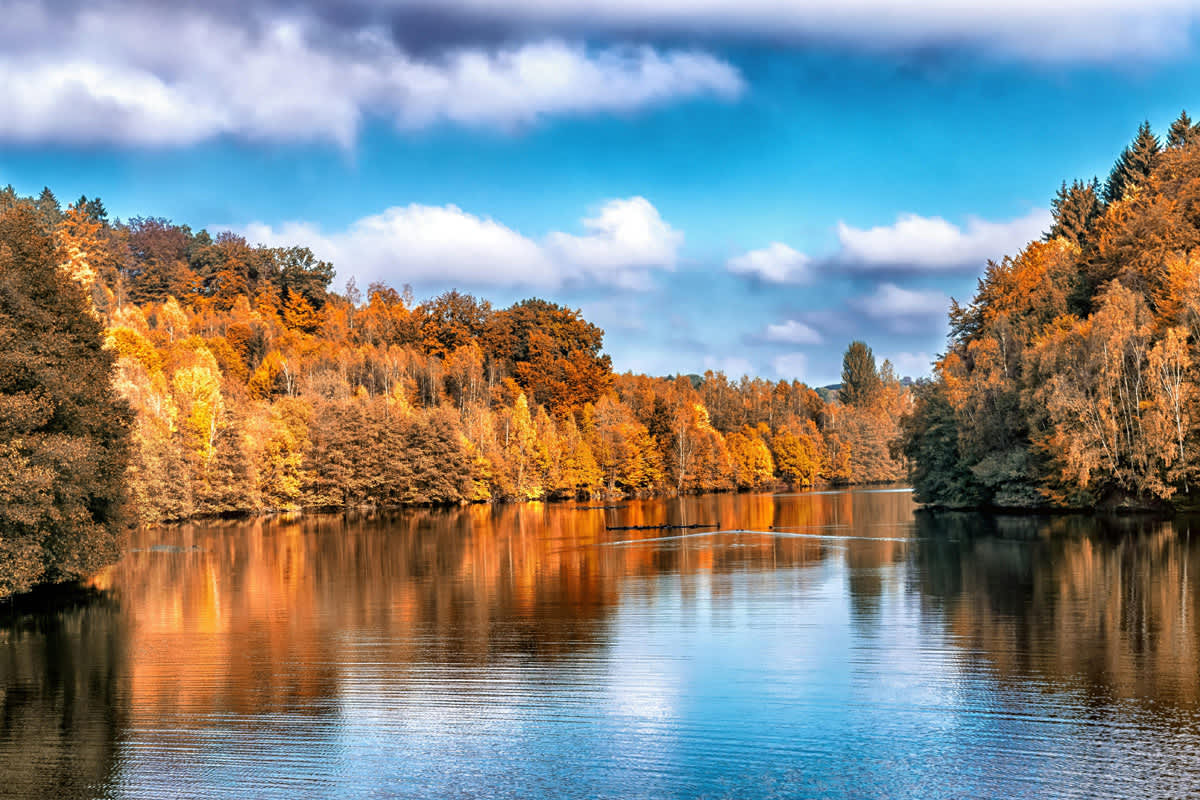
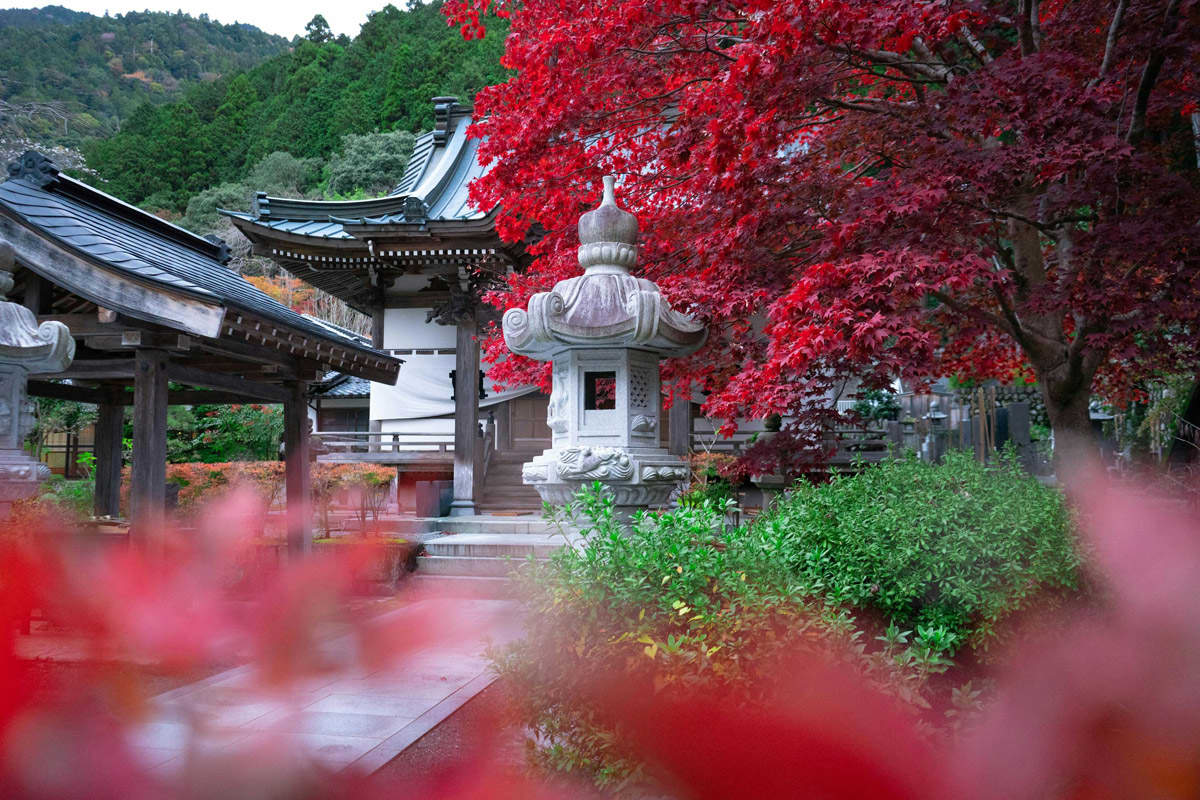
Here, deciduous trees mainly turn yellow and orange, while in North America and East Asia they are predominantly red. This is due to the colorants present in the leaves.
Whether «golden» or «red» - it all depends on the leaf pigments
If you take a walk through the forest in autumn, you almost automatically enjoy the yellow and orange splendor of the leaves.
It is not for nothing that we speak of a «golden autumn». If you were to take this walk on the North American continent or in East Asia, the spectrum of colors would be much wider.
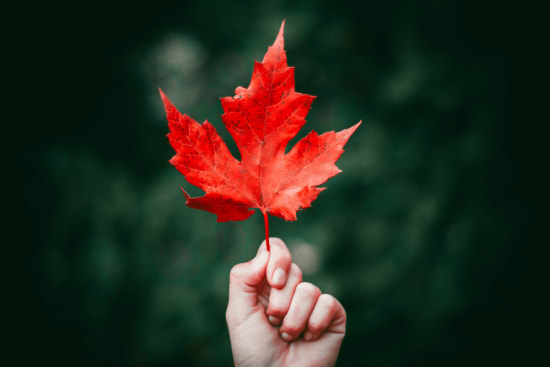
There, the leaves not only turn yellow and orange, but above all bright red.
Why is this? To get to the bottom of this phenomenon, you must look at the different leaf pigments.
Leaf pigments that color our forests orange and yellow
The best-known leaf pigment is chlorophyll, which is responsible for the green color of the leaves but is also essential for the survival of the plant.
This is because it absorbs light, which is converted into energy during photosynthesis. This is stored for the winter months in the form of starch.
Yellow and orange carotenoids and xanthophylls are also always present in the leaves. When the temperatures drop in the fall, this is the sign for the leaves to stop producing chlorophyll.
The green disappears and the yellow and orange remain until the leaves almost fall.
Anthocyanins - sun protection and pest deterrent
However, something else happens in North American and East Asian trees.
They also produce pigments that belong to the anthocyanin group. Anthocyanins appear from blue to violet to red and are said to have positive effects.
They are supposed to act as sun protection. In addition, the bright red color is believed to deter harmful insects from laying their eggs on the tree.
So, if they are useful, why don't our trees produce anthocyanins? Several ice ages have been responsible for this.
The course of the Alps and mountain ranges as the reason
When the ice ages set in, the previously evergreen trees began to shed their leaves to protect themselves from the cold.
As the Alps run from west to east in Europe, they form a barrier. If it is cold in the north, both trees and insects are trapped and cannot escape to warmer climes.
During the ice ages, many trees and aphids therefore died out and the production of anthocyanins did not take place.
In North America and East Asia, on the other hand, mountain ranges cross the continents from north to south and the trees - including harmful insects - were able to migrate from north to south.
This was the starting signal for the evolution of anthocyanins in the leaves.
What impact will climate change have on Indian summer?
American researchers have had reason to take a closer look at anthocyanins and the associated sun protection.
Autumn in the north-east of the USA and Canada is particularly sunny, and the leaves there are correspondingly colorful. Our trees produce fewer pigments.
It has been cloudy more often so far, making more intensive sun protection unnecessary.
Of course, the question now is what consequences global climate change will have in this respect.
You don't have a MyFleurop account yet?
Register now
MyFleurop customer club5 good reasons
Benefit from attractive advantages with MyFleurop:
50 MyFleurop points starter bonus.
Collect points online, by phone and at Fleurop partners (one point per franc).
From 300 points, deduct credit from your order.
Exclusive raffles and competitions.
On request, we will remind you of birthdays, etc. by e-mail or SMS.
You don’t have a corporate account at Fleurop yet? Register now
7 great reasons for a B2B-account at Fleurop:
Register now as a B2B client and profit from a discount on the flower value from your very first order.
For further questions please contact us per phone (+41 44 751 82 80) or mail.
One account for your entire team: easy & clear
Order online by 3 pm: delivered throughout Switzerland on the same day
Local florists, worldwide delivery: sustainable and personal
Varied assortment: the ideal gift for every recipient
Flowers by subscription: minimal effort for you!
Corporate flowers: branding and individuality for your floral gifts