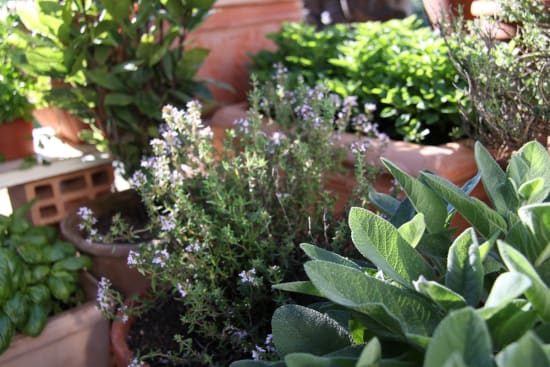
Sage, rosemary and thyme make us dream of the Mediterranean, of
Italy and Provence.
They intensely flavor and are very easy to care for.
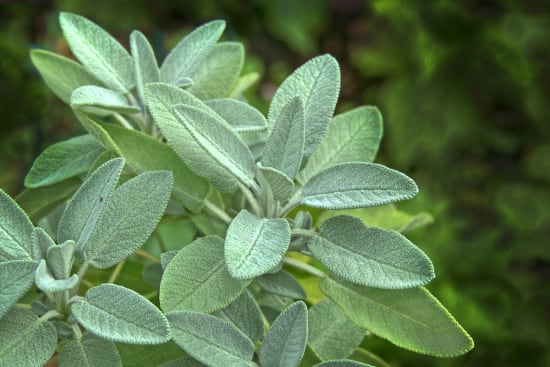
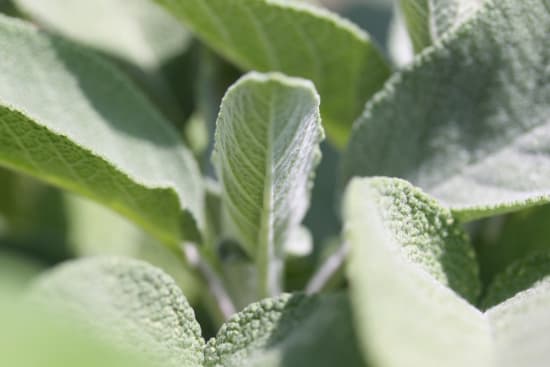
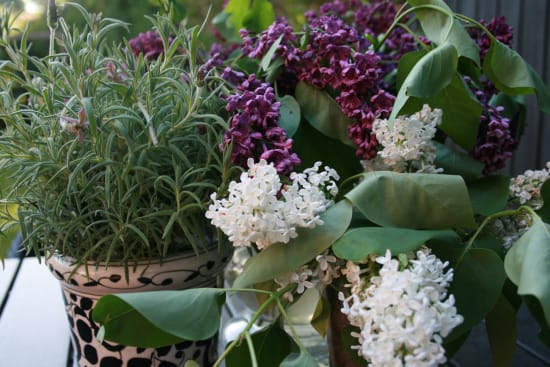
Sage - for more «italianità» in the kitchen
Tortellini with butter and sage - who does not know them.
But sage has more to offer. It smells aromatic and tastes - depending
on the variety - mild to slightly bitter.
It is used for meat, venison,
poultry, sausages, fish, herb cheese and much more. Also adds flavor
to hearty dishes such as liver, ham or lamb. In addition, it is
particularly suitable for fatty dishes because it promotes their
digestibility. Last but not least, pineapple
sage is now making a splash in desserts and cold fruit punch.
On the balcony or in the garden, the perennial sage needs a sunny
spot with well-drained soil.
It is easy to care for and
should only be watered a little when the substrate has dried well.
Sore throat and hoarseness? The answer is «sage»
Often, old home remedies come back into fashion. For example, sage.
In the past, people used it against respiratory diseases. Today, we
know that sage actually helps because it contains an acid that has
antiviral,
antibacterial and anti-inflammatory properties.
For example, when you suffer from a sore throat, chew a fresh sage leaf.
This helps. In addition, sage tea with honey and lemon juice is
considered an excellent remedy in case of inflammation of the throat
and tonsils. This is even used
by opera singers when they have overexerted their vocal cords.
In the past, sage was also used to reduce excessive sweating.
Today we know that it actually inhibits the production of sweat.
This explains why in commerce are found many deodorants with the
ingredient «sage».
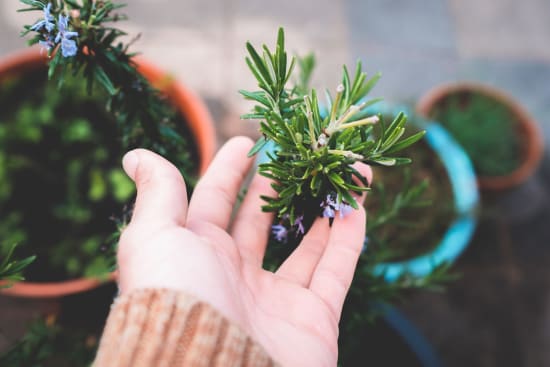
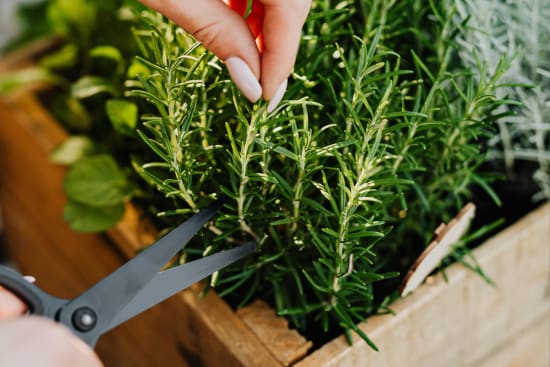
Rosemary - tastes like a Mediterranean vacation
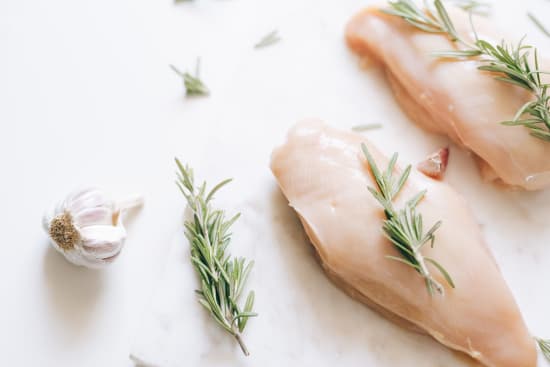
Anyone who loves Mediterranean cuisine knows rosemary. It has a tart,
resinous, slightly bitter flavor and goes well with stews, venison,
lamb,
rabbit, chicken, seafood, fish, vegetables and rosemary potatoes.
It is also often used for herb butter or to flavor olive oil and is
considered a
classic barbecue seasoning. Rosemary is even used for desserts.
Unlike other herbs, rosemary tolerates high heat and long cooking
times, but is difficult to combine with other spices.
On the balcony
or in the garden? Perennial rosemary likes a sunny location. Choose a
nutrient-rich,
well-drained substrate and water sparingly but regularly.
Rosemary - for love and fidelity
Rosemary stands for love, fidelity, fertility and immortality.
In ancient civilizations, it was used as an offering to the gods.
The Romans, on the other hand, used it – together with other
herbs - to make fragrant bridal bouquets more than 2000 years ago.
Later, rosemary even became a «soloist» at weddings. In Germany,
for example, brides were
still wearing rosemary wreaths at the beginning of the 20th century.
One of the most unusual experiences was certainly the Portuguese and
Italian custom of placing rosemary in the bride's shoes. But perhaps
the scent of
this herb helped the feet to get through the day «odor-free».
By the way, in Belgium rosemary was the symbol of life for a long time.
That is why children
were told that newborns would be taken from a rosemary bush.
Thyme - and Provence is within reach
Thyme is an important ingredient in Provençal cuisine.
It spices very intensively, has a fresh aromatic taste with a
slightly bitter note and can be used for many dishes.
For example, for meat, fish, pasta and potato courses, for stews,
sauces and soups, tomato and mushroom specialties, for minced meat and
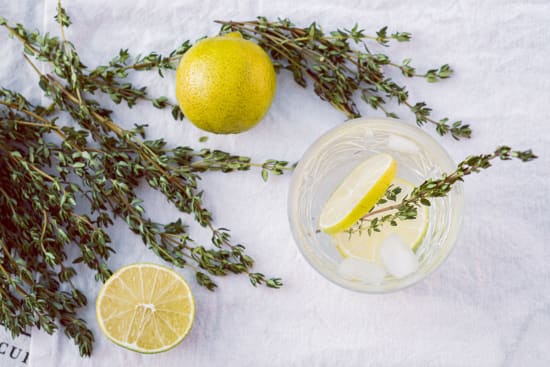
shish kebab. Thanks to its light
citrus note, lemon thyme is even used in poultry and ratatouille.
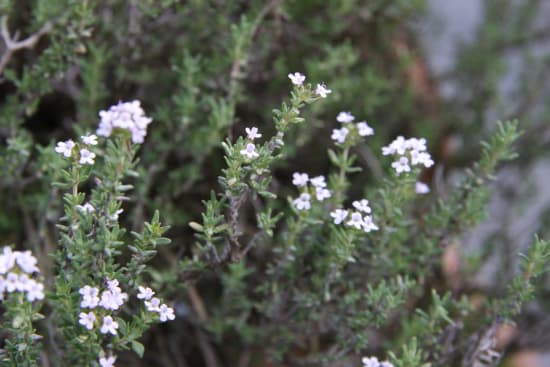
On the balcony or in the garden, thyme proves to be very robust and
does not need much water. It prefers a full sun location.
Those who
grow thyme in pots or in the garden must ensure
good drainage. Waterlogging should be avoided at all costs.
More motivation? How about a bath with thyme?
The name thyme comes from the Greek word «thymos» which means
strength and courage and recalls the stimulating effect of this
condiment. In any case, the Roman legionnaires never let themselves
be deprived of their bath of hot water in a tub containing a
decoction of thyme before each battle to increase their motivation.
In the 11th century, monks brought thyme from Italy to Central Europe.
There it became known not only for its antiseptic properties.
Rather, it was also discovered in English and French cuisine.
Today, the common thyme is the best known.
But the lemon thyme (hardy plant, lemony scent) as well as the cascade
thyme (thymus odoratus,
semi-hardy, with a special boletus aroma) are also popular.
Fresh herbs delivered directly to your home by mail –
conveniently ordered from FleuropHOME.
You don't have a MyFleurop account yet?
Register now
MyFleurop customer club5 good reasons
Benefit from attractive advantages with MyFleurop:
50 MyFleurop points starter bonus.
Collect points online, by phone and at Fleurop partners (one point per franc).
From 300 points, deduct credit from your order.
Exclusive raffles and competitions.
On request, we will remind you of birthdays, etc. by e-mail or SMS.
You don’t have a corporate account at Fleurop yet? Register now
7 great reasons for a B2B-account at Fleurop:
Register now as a B2B client and profit from a discount on the flower value from your very first order.
For further questions please contact us per phone (+41 44 751 82 80) or mail.
One account for your entire team: easy & clear
Order online by 3 pm: delivered throughout Switzerland on the same day
Local florists, worldwide delivery: sustainable and personal
Varied assortment: the ideal gift for every recipient
Flowers by subscription: minimal effort for you!
Corporate flowers: branding and individuality for your floral gifts